Call for free estimate
Licensed & Insured
Hurricane preparation in Southwest Florida usually starts with shutters, supplies, insurance documents and a plan for where the family will go if conditions worsen. Trees deserve a place on that checklist too.
A healthy, well-maintained tree is not guaranteed to withstand a major storm, and no pruning method can make a property hurricane-proof. But identifying obvious weaknesses before severe weather arrives can reduce avoidable hazards and give you time to address work that should not be attempted when a storm is already approaching.
The worst time to discover a large dead limb over your driveway is when a hurricane watch has already been issued. Tree companies can become extremely busy as a storm approaches, and rushed last-minute cutting can create its own problems.
Make tree inspection part of seasonal property maintenance. Walk the property while the weather is calm and look at trunks, major branches, canopy balance and the area around the roots.
Dead or partially broken branches are obvious candidates for attention because they may detach under wind load. Dead wooding removes dead branches while preserving healthy parts of the tree.
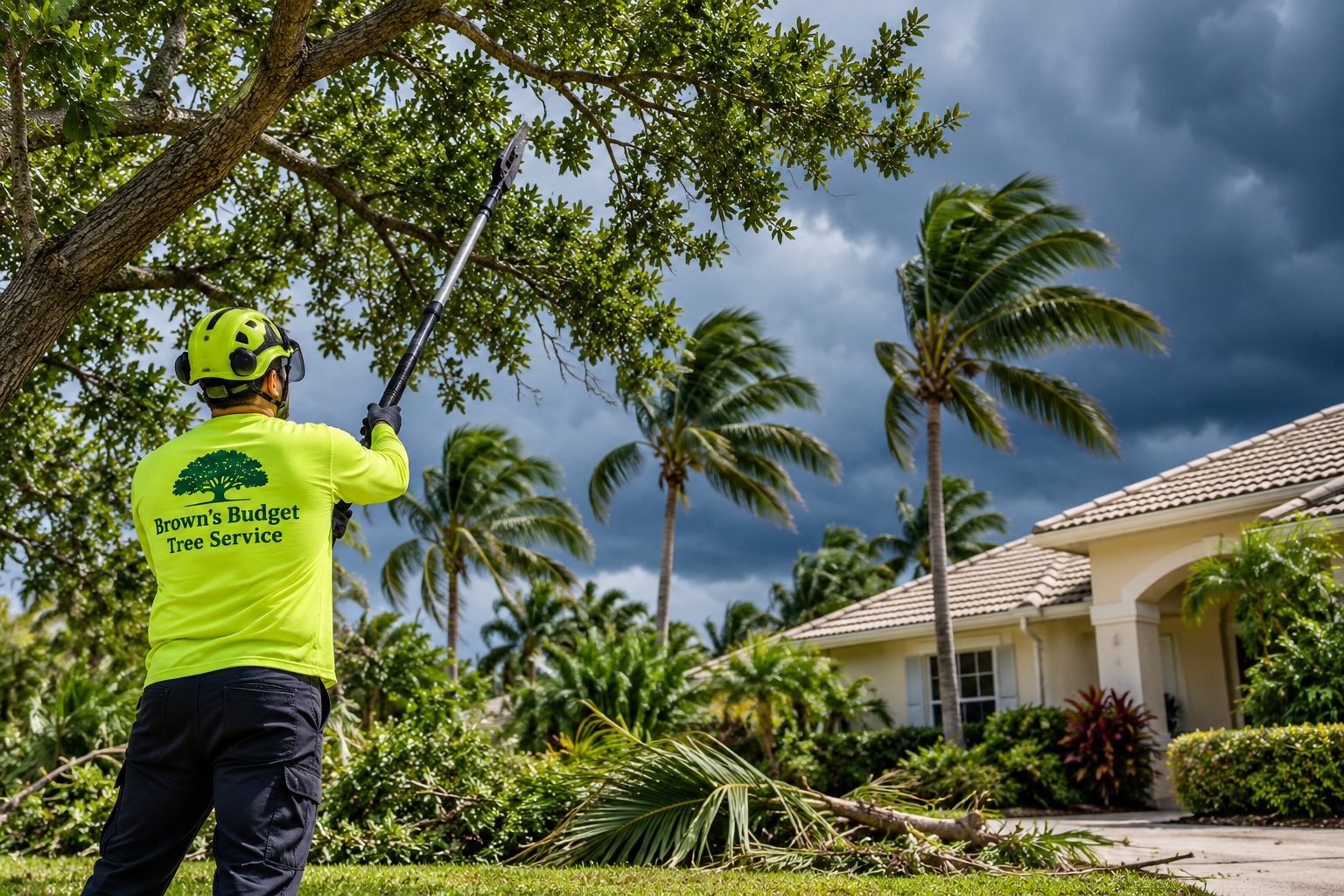
Pay particular attention to limbs over roofs, vehicles, walkways, fences and other areas where failure could cause damage or injury. Large overhead branches should be handled with appropriate equipment and experience.
Good pruning is not simply cutting back as much foliage as possible. Excessive or improper pruning can stress a tree, stimulate weak growth and leave large wounds.
The goal should be to address specific problems: dead wood, damaged branches, poor clearance, certain structural issues or excessive weight in selected limbs. Depending on the tree and site, services such as structural pruning, side trimming or canopy elevation may be appropriate.
Branches that touch or hang close to roofs, siding or other structures can become more problematic in high winds. Trees may also obstruct visibility or access when lower limbs have become overgrown.
Review clearance around the home, driveway and areas used by vehicles or emergency access. Canopy elevating can increase clearance beneath a tree when performed appropriately.
A tree’s stability depends heavily on its root system. Walk around the base and look for changes such as lifting soil, newly exposed roots, erosion, excavation damage or a change in the tree’s lean.
Do not pile new soil or heavy materials over the root zone simply to ‘stabilize’ a tree. If the base looks different or the tree has shifted, have the condition evaluated.
Large shade trees get most of the attention, but palms and smaller ornamental trees can also drop fronds, branches or damaged material during storms.
Maintenance needs vary by species. Avoid removing healthy material simply because hurricane season is approaching. Focus on dead, damaged or clearly problematic growth and use pruning practices appropriate for the tree.
Tree preparation is only one part of storm cleanup. Loose branches, piles of brush and yard debris can become difficult to manage when heavy rain and wind arrive.
If you have recently trimmed trees or cleared an overgrown area, arrange for debris removal or chipping before severe weather. This also keeps access areas around the property cleaner.
Once tropical-storm or hurricane conditions are imminent, safety comes first. Do not climb trees, use ladders in high wind or attempt chainsaw work during dangerous conditions.
After the storm, assume hanging limbs and damaged trees may be unstable. Keep a safe distance, watch for utility hazards and contact the appropriate utility or emergency service when power lines are involved.
Photographs can help you remember the condition of major trees and property features before a storm. Afterward, document visible damage before cleanup when it is safe to do so.
These photos can also make it easier to explain the situation when requesting an estimate or discussing property damage with an insurer.
Hurricane preparation is not about guaranteeing that every tree will survive. It is about identifying manageable problems before severe weather turns them into urgent ones.
Brown’s Budget Tree Service offers tree trimming, tree removal, dead wooding, canopy elevating, brush removal and 24-hour emergency service throughout its Southwest Florida service area. For pre-storm maintenance or post-storm tree work, request a free estimate.